The violent consequences of the North Korea-Syria arms trade
Clandestine cooperation between pariah states has left trail of bodies
June 19th, 2013
WASHINGTON, D.C. – The blast at the al-Safir facility in July 2007, killing Syrians, Iranians and at least three North Korean ballistic missile specialists, is just one occasion in which underover operatives have died working on Damascus's WMD arsenal.
The clandestine weapons collaboration between North Korea and Damascus in recent years has left a trail of bodies from Moscow to the Syrian desert to North Korea in a deadly game of spy versus spy hidden in the shadows of the Middle East.
A mysterious blast nine years ago was one of many incidents in which individuals, including North Koreans, have met violent ends cooperating with Syria in developing weapons of mass destruction.
SYRIA AND THE RYONGCHON 'BOMB'
In early 2004, the United States National Security Agency detected a curious, unusually high cluster of sustained electronic communications traffic between a remote location in the northeast Syrian Desert and Pyongyang. The NSA shared the information with Israel's military signals intelligence and cypher department, Unit 8200, which designated the information for priority monitoring.
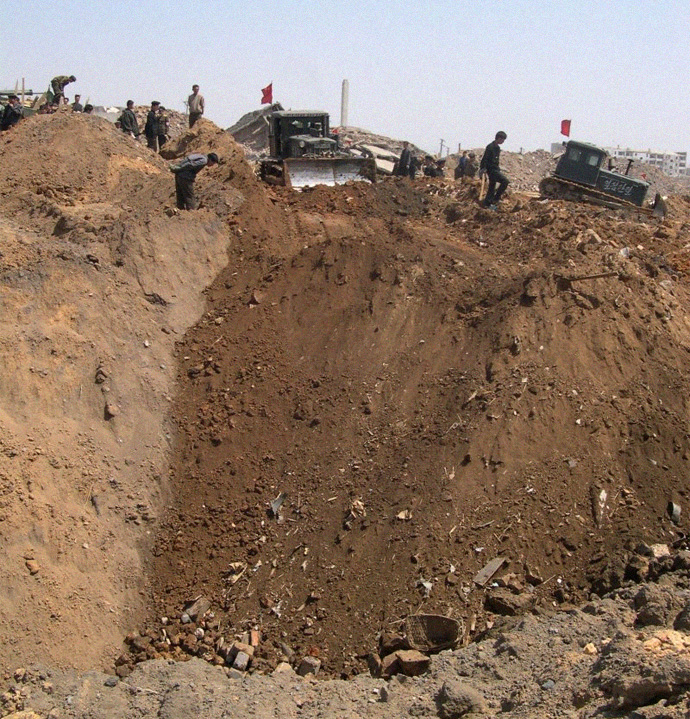
A few months later, on April 22, 2004, an explosion destroyed a train and decimated the small northwestern North Korean town of Ryongchon as the train headed to the coastal shipping port of Nampo.
The explosion, measuring 3.6 on the Richter scale and detected at international earthquake monitoring stations in Russia and the United States, was so devastating that Pyongyang appealed for emergency international humanitarian aid to address the crisis — a highly unusual public action by the secretive regime. The International Committee of the Red Cross was allowed to visit the area and reported more than 160 people killed and 1,300 injured after the blast flattened much of the town, destroying thousands of buildings and leaving a crater 60 meters deep.
Pyongyang officially said a train carrying fertilizer containing ammonium nitrate and petroleum accidentally came into contact with electrical wires and exploded, but in the years since a clearer portrait of intrigue suggesting intentional sabotage has emerged.
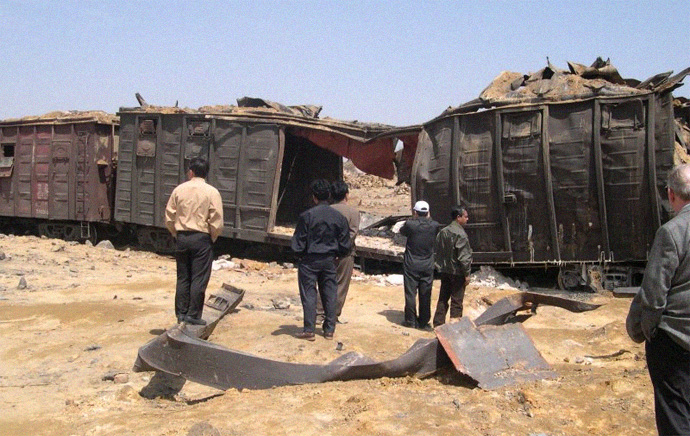
In fact, the train was destroyed by a mobile telephone remote control device activated by unknown persons nearby, intelligence agencies have since concluded.
Never acknowledged is that more than a dozen Syrian ballistic missile weapons scientists and technicians employed by the Syrian Scientific Studies and Research Center, the agency in charge of Syria's covert weapons of mass destruction development program, were killed in the mysterious blast.
The Syrian weapons specialists were accompanying a highly clandestine cargo of missile and other components to the North Korean port of Nampo, destined for Syria's weapons of mass destruction development program operated by the SSRC.
North Korean military wearing chemical hazard protective suits removed debris and the Syrian bodies from the scene. Within days, Syrian military aircraft arrived under the auspices of delivering humanitarian aid to the civilian blast victims, and on May 1 departed with the bodies of the dead Syrian SSRC employees.
The bodies of the approximately one dozen dead Syrians were claimed by the SSRC, and the Syrian and North Korean military personnel who transported the bodies to the Syrian aircraft were also wearing hazardous protective suits.
Within days, North Korean security officials found a damaged cellphone still wrapped in duct tape near the explosion and abruptly halted the countries entire nascent mobile phone system, confiscating the 10,000 mobile devices in use in the first national cellphone network, established only months before.
North Korea did not allow mobile phone use in the country for another five years.
In the period after the blast, Israeli and other intelligence services noted more than a dozen trips to Pyongyang by senior officials of the SSRC involved in their missile, chemical warfare and nuclear weapons development program.
NUCLEAR COOPERATION
While North Korean-Syrian military cooperation was known to Western intelligence services since the 1990s, North Korean-Syrian nuclear cooperation was not clarified until early 2007, only months before an Israeli airstrike destroyed Syria's nuclear reactor in a remote desert region near al-Kibar in northeast Syria.
In the annual CIA briefings to Congress on WMD proliferation, the CIA did not list North Korea as a supplier of nuclear technology between 2001 and 2006.
But intelligence had begun to mount since 2001 that nuclear cooperation between North Korea and Syria began "probably as early as 1997."
When Bashar Assad took power in 2000 after his father died, Israel began updating its intelligence file on the young leader. Analysts noted a stream of high-level Syrian and North Korean officials responsible for nuclear weapons development exchanging secret visits.
Mounting evidence in the following years included the interception of an unusual amount of electronic communication between a remote Syrian desert location and Pyongyang, numerous reciprocal visits of high level nuclear officials and scientists between Syria and North Korea, North Korean procurement of nuclear technology for Syria, and materials gathered by Israeli intelligence in break-ins to a Syrian official's London hotel room, where the contents of his computers were seized.
This took place in December 2006, when a senior Syrian intelligence official came to London under a false name. Mossad agents broke into his hotel room and copied the contents of his computer.
What they found astonished them. There were blueprints of a nuclear facility and scores of photographs of the nuclear plant under construction, apparently in the Syrian Desert.
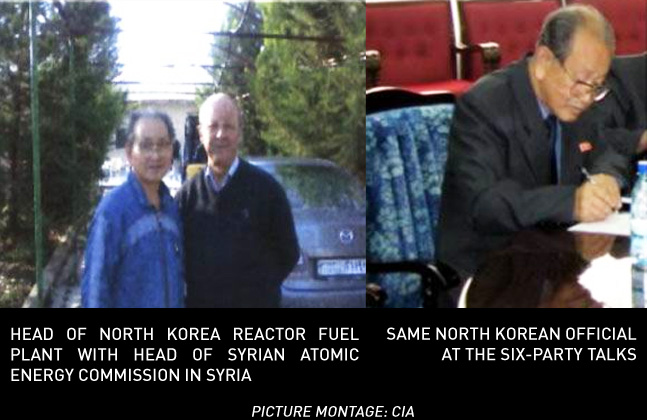
One picture was of North Korea's top nuclear scientist, Chon Chibu, in charge of North Korea's plutonium nuclear fuel processing site at Yongybon, posing with Syria's atomic energy agency director, Ibrahim Othman, in Syria. Vehicles in the background clearly showed Syrian license plates.
In February of 2007, a senior Iranian general attached to the Republican Guard defected to the west. He proved a goldmine of information. Gen. Ali-Reza Asgari said Iran was financing a nuclear facility in Syria designed and constructed by North Korea.
The defection was top secret and Asgari soon disappeared. Iran announced he had been "kidnapped by the Mossad and probably killed." In fact, Asgari was whisked to a U.S. military base in Germany where he provided key details before being given political asylum.
ISRAELI STRIKE
In August 2007, Israeli commandos dressed as Syrian soldiers were inserted by helicopter into the remote northeastern Syrian Desert to the nuclear site near the Euphrates River. They collected samples which were brought back to Israel. Tests confirmed not only the presence of nuclear material, but the signature showed that it originated in North Korea.
Both Israel and Washington knew that there were North Korean specialists working at the site. "There are North Korean people there. There's no question about that," U.S. State Department official Andrew Semmel was quoted as saying in the aftermath of the attack.
That September 3, a North Korean ship, the Al Hamed, arrived at the Syrian port of Tartus with a cargo manifest claiming to be carrying cement. An Israeli agent was monitoring the ship and took photographs of the cargo. Israel contends the vessel was delivering key nuclear material for the plutonium weapons plant.
Three days later, and two months after the deadly blast at the Aleppo chemical weapons site, eight Israeli F-16 fighter jets mounted the stealth air strike on a top secret plutonium production nuclear weapons facility being built under contract by North Korea near al-Kibar .
Ten more North Korean nuclear scientists and technicians were killed in the Israeli assault.
The nearly completed North Korean-designed and built nuclear facility was the result of a secret pact signed by senior North Korean government officials with Assad in June 2002.
The estimated $2 billion nuclear weapons facility in Syria was partially financed by Iran.
North Korea was additionally paid with five annual deliveries of 100,000 tons of Syrian wheat, in a $120 million-deal personally signed by Assad, documents in the Syrian president's handwriting show.
The bodies of the 10 North Korean nuclear advisors killed in the Israeli bombings were returned to North Korea in October.
In a secret April 2008 U.S. diplomatic cable released by WikiLeaks, then U.S. Secretary of State Condoleezza Rice wrote to State Department officials that Israel had destroyed the reactor that "Syria was clandestinely constructing, we judge with North Korean assistance."
Rice spoke of the fear that Washington had of publicizing the information: "We have delayed sharing this information with you, because our first concern was to prevent conflict."
"We believe -– based on strong evidence –- that North Korea assisted Syria with the reactor," Rice wrote. "The U.S. intelligence community conducted an intensive, months-long effort to confirm and corroborate the information Israel provided us on the reactor and to gather more details from our own sources and methods…our intelligence experts are confident that the facility the Israelis targeted was in fact a nuclear reactor of the same type North Korea built indigenously at its Yongbyon nuclear facility" and "we have good reason to believe this reactor was not intended for peaceful purposes."
OVERCOMING SETBACK
Undeterred by either the military strike on the Syrian nuclear facility in September or the July explosions at the chemical weapons facility, North Korea and Syria exchanged high-level weapons delegations for urgent meetings in both September and October.
On September 10, 2007, four days after the Israeli bombing of the Syrian facility, North Korean leader Kim Jong Il sent a message to Assad reaffirming that "the excellent friendly and co-operative relations between the two countries are steadily growing stronger even under the complicated international situation." A more strident message was sent the following day condemning the Israeli air assault as "illegal" and "a very dangerous provocation."
On September 22 2007, a delegation of Syrian diplomats led by leading Ba'ath party figure Saaeed Eleia Dawood, was met by Kim Yong Nam, head of the Supreme People's Assembly.
On September 24 of the same year North Korea's official party newspaper, the Rodong Sinmun, said, "Israeli warplanes' intrusion into the territorial airspace of Syria and bomb-dropping are an outright violation of Syria's sovereignty and a grave crime that destroys regional peace and security," and that the United States supported this "brazen behavior."
In November 2007, North Korean ground-to-ground missile engineers secretly returned to Syria to hold talks on how to resume tests to arm with chemical warheads the ballistic missiles Pyongyang provided to Damascus. The objective was to extend the range and accuracy of Syrian missiles to be able to reach the entirety Israeli territory.
ASSASINATIONS
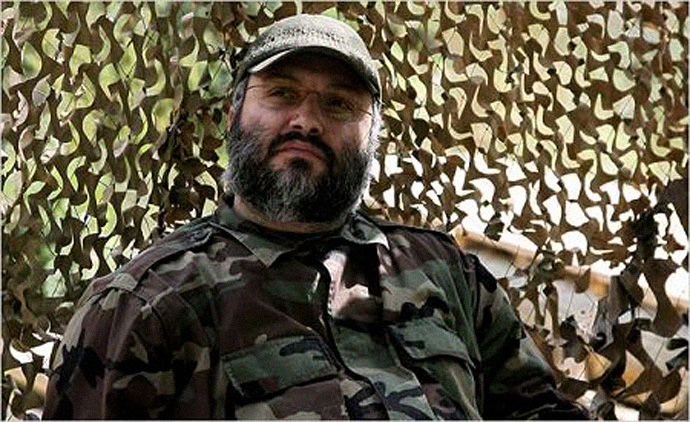
In February 2008, Hezbollah commander Imad Mughniyah, who was also Hezbollah's chief liaison for North Korea, was assassinated in downtown Damascus.
Mughniyah had made several trips to Pyongyang and coordinated North Korean assistance to Hezbollah, which included a variety of conventional weapons, including surface-to-air missiles, training by Pyongyang of their guerrilla fighters, and the sophisticated construction of a North Korean-designed and built underground tunnel network in southern Syria along the Lebanese border.
Mughniyah was also one of the most-wanted terrorists and bomb-makers in the Middle East, widely recognized as the mastermind of the bombings at the U.S. Marine barracks and embassy in Beirut that killed hundreds of American troops and diplomats in the 1980s.
Israeli intelligence had information that Mughniyah was plotting a military attack in retaliation for the Israeli strike against the North Korean-built plutonium weapons facility, according to a detailed report by Der Spiegel in 2009.
On the night of February 12, 2008, Imad Mughniyah attended a party at the Iranian embassy in Damascus where other guests included the Hamas leader Khaled Mashal and the Syrian official in charge of coordinating covert weapons projects with Pyongyang, Gen. Mohammed Suleiman. After leaving the reception, Mughniyah was killed when a bomb placed in the headrest of the driver's seat of his Pajero exploded.
Six months later, on August 2, 2008, on the coast near the Syrian city of Tartous, Suleiman was relaxing at his weekend home. Suleiman was Assad's top military and security aide in charge of Syria's covert weapons, including their missile, chemical and nuclear weapons-development program.
Suleiman was also Damascus's chief liaison with North Korea.
Charged with ensuring the security of the North Korean scientists, military advisors and technicians stationed in and visiting Syria, Suleiman had made numerous trips to North Korea to personally oversee the procurement of nuclear and, chemical weapons, as well as ballistic missile components.
Suleiman was in charge of "development of missiles, chemical and biological weapons and nuclear research and development. He coordinated the transfer of the reactor's parts to Syria and was in charge of security arrangements for the North Korean scientists and technicians involved in its construction," wrote Michael Bar-Zohar and Nissim Mishal in their 2010 book "Mossad – The Great Operations."
After the Israeli bombing destroyed the plutonium production site, Suleiman began plans to build a replacement nuclear facility, but "Suleiman's new mission was much more complex and difficult than before, since he was now aware that he was on the Israeli and American intelligence agencies' radars."
Accounts of what happened next vary depending on what sources are cited, but agree that Suleiman was in his vacation home when assassins' bullets killed him while he was eating at his dinner table with family and friends.
A yacht with Israeli navy scuba divers and snipers was two kilometers off the Syrian coast.
According to the London Sunday Times, two scuba divers with guns in water-proof cases swam to shore, identified Suleiman and both fired one shot, hitting the chief of Syria's missile, chemical and nuclear weapons program in the head. Other reports suggest Israeli snipers firing from the sea vessel.
Several days after the killing, Syria's official media released a short statement: "Syria is holding an investigation to find those responsible for this crime."
Secret U.S. diplomatic documents, released by WikiLeaks, quote U.S. officials saying Syria believed Israel was responsible for the assassination of Suleiman, who "enjoyed a reputation… as having special status and proximity to" Assad.
"As in other recent assassinations in Syria, speculation about who could have done it will likely be rampant," read the classified August 2008 cable from the U.S. embassy in Damascus. "The most obvious suspects are the Israelis."
RUSSIAN CONNECTION
In the 1990s, the commander of the Russian Military Academy for Chemical Warfare, Gen. Anatoly Kuntsevich, was also the top adviser on chemical weapons disarmament for then-Russian president Boris Yeltsin. But, as the former Soviet Union disintegrated, Kuntsevich secretly took on lucrative freelancing opportunities on the international chemical weapons black market.
In 1993, through a front company Kuntsevich created, he provided Syria 800 kilograms of key chemicals, smuggled from the Russian Military Academy for chemical warfare, to produce a sophisticated version of VX nerve gas which was adapted into chemical warheads.
Kuntsevich worked secretly for Damascus in exchange for large amounts of money to build their chemical weapons programs until 2002, when he was said to have died mysteriously on a flight from Damascus to Moscow. But Israeli investigative journalist Ronen Bergman notes that his headstone in a Moscow cemetery lists his date of death as three days before the flight's departure.
His death came after several high level demarches from Israel to the Kremlin to force Kuntsevich to cease his chemical weapons activities went unaddressed.
And in 2010, the Russian deputy head of the GRU, the military intelligence agency, died in a purported swimming accident in Damascus.
Israeli agents are suspected of being responsible for both deaths.
HOME TERRITORY
In July 2012, the core leadership of Syria's military and security services were killed or injured in a bomb attack at the headquarters of the National Security Bureau in Damascus. Asef Shawkat, head of military intelligence; Rajha Daud, Minister of Defence; Hesham Bakhtiar, head of the National Security Service; and Tourkmani Hassan, Chief of Staff, were killed in the blast.
What went largely unnoticed was the assassination four days later of Dr. Nabil Zougheib, Syria's top missile scientist and head of the missile development program for the Syrian Scientific Studies and Research Center.
A trained missile engineer, Brig. Gen. Nabil Zougheib was a frequent visitor to Pyongyang. He had directly supervised North Korean missile engineers weaponizing North Korean supplied ballistic missile with chemical warheads.
"We have seen assassinations to people who hold key positions in research programs where the aim was to stop these research programs as with Doctor Nabil Zougheib," Damascus based Syrian journalist Alaa Ebrahim said in media interviews.
Other Syrian scientists assassinated include a nuclear engineer and researcher, Aws Abdel Karim Khalil, and Brigadier General and chemical engineer Naël elDakhil from the Department of Chemical Engineering."
Dr. Ali Mohamad, editor-in-chief of the Syria Tribune, a pro Assad Damascus based media organization, said in a media interview "Let's remember that the Syrian official who was responsible for all military research projects has been assassinated in Damascus by the rebels," he said. "Let's also remember that the person who orchestrated the Syrian long-range missile project colonel Dawoud Rajiha, was also assassinated in Damascus. This is about stopping the Syrian scientific military research projects and is about breaking the link that will help [Israel] overcome the Lebanese resistance and the Palestinians."
They were only the latest in a long list of dead scientists who have worked on Syria's weapons of mass destruction development program over the last decade.
Main picture credit: David Hill, ECHO ■