The Human Words for the Sound of a Dog Barking in Different Languages: Lamont Launches Groundbreaking Linguistic Research Project of Oddities of Human Brain
A Preliminary Guide for Human Companions of Dogs, Linguists, and International Globetrotters: With a Bonus List of the Word Dog in Different Languages
By Nate Thayer
My pal, Lamont, blessed with the quirky curiosity shared by all the other Great Thinkers in history, has long been perplexed by the nonsensical workings of the human mind.
Lately, he has focused on the global inability of different groups of the human species to translate the universal language of the sound of canine barking shared in common by all dogs, regardless of the geographical political borders they cohabit with humans. If a dog barks in Moscow, Managua, Manila, Mogadishu, or Minsk, s/he is understood by his canine counterparts whether they live in Perth, Pyongyang, Paris, Phnom Penh, or Pretoria.

Whether in Argentina, Azerbaijan, or Angola, dogs bark in the same language
Lamont's initial research strongly suggest the human brain is far less developed, inefficient, and contradictory in this regard. This is most starkly comparatively demonstrated by the way humans translate the sound of a dog barking into their potpourri of languages. Not translations of the word for a dog's "bark", but rather the words used to depict the sound a dog makes when barking.
Scientific evidence shows, however, that dogs themselves understand the barks of other dogs irrespective of linguistic, political, or ethnic artificial borders. But humans hear those barks differently: apparently very, very differently.
For example, the English rendition of the sound of a dog barking, "woof woof", "arf-arf", "ruff-ruff" and "bow-wow" is translated in Mandarin Chinese as "wang-wang" and Cantonese as "wo-wo", "wow-wow, and "wong-wong" and in Tamil as "wal-wal", "bow-bow", or "lol-lol."
This suggests that even within specific languages there is no consensus or agreement and there appears an ongoing vigorous divergent linguistic debate.
Other languages also further parse the word according to allegedly different sounds made by different sorts of dogs. For example, "yip-yip" or "yap-yap" in English is used exclusively for the bark of small, usually annoying ankle biters, never for big dogs.
The one apparent universal human linguistic constant is the shared belief that dogs repeat their sound twice, as in the English "Woof-Woof" or "arf arf"; the Arabic "hau-hau" or "how-how"; Balinese "kong-kong"; Burmese "woke-woke"; and Czech "haff-haff".
Linguists contend this is a classic example of onomatopoeia, when humans attach a word to a sound to represent it, such as "hiss", "buzz", "pow", "zap" and "thud".

Dogs Know What Each Other Mean When They Exchange barks
In addition, although there is obviously no sound attached, in American Sign Language the sound of a dog barking is depicted by the gesture of both closed fists held horizontally together-fingers in towards each other, followed by twice rapidly opening the clenched fists simultaneously together exposing the fingers.
And for the extreme linguistic specialist, even Esparanto—a language created specifically to further universal human communication– the sound a dog makes when it barks is the term "boj-boj", in case anyone had lingering doubt of the degree humans have been unable to find common ground on this issue.
Dogs, on the other hand, data shows, have developed a superior, more effective system of a universal global language, their linguistic skills allowing for communicating despite geographical locations and regardless of ethnic differences.
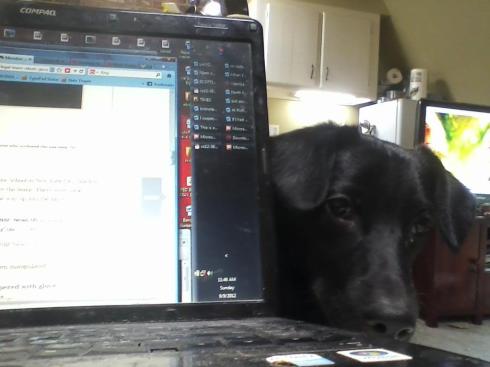
Lamont Hard at Work Conducting Research
Lamont is compiling a list of the human words for how humans from various ethnic, racial, and tribal groups hear or interpret the sound dogs make when they bark in various languages and dialects and creating an encyclopedia of these phonetic translations. He welcomes and encourages any suggestions, corrections, and additions
If anyone knows additional words or phrases used by humans to define the sound of a dog barking in other languages or dialects, or notice mistakes or mispronunciations, please send your additions, corrections, commentary etc. in care of Lamont or simply post your comments on this blog.
This groundbreaking research project, the brainchild of the near world renowned global problem solver and peacemaker, Lamont, is hoped to contribute to greater world mutual understanding and agreement, promoting peace, common ground, and mutual respect for, and appreciation of, differences that too often contribute to conflict, misunderstanding, instability, and war.

The Seminal Work on Understanding canines for Humans
This project is in its early stages and far from comprehensive and is the result of multiple sources. The sources for this admittedly incomplete, unscientific, and not a bit quirky vital academic documentation project are varied and probably full of rank errors. However the internationally recognized scientific expert on the subject, Canadian psychologist Stanley Coren, Ph.D., F.R.S.C., should get primary credit for the documentation. Coren is the author of such classics as, Born to Bark, Do Dogs Dream? The Modern Dog, Why Do Dogs Have Wet Noses? The Pawprints of History, How Dogs Think, How To Speak Dog, Why We Love the Dogs We Do, What Do Dogs Know? The Intelligence of Dogs, Why Does My Dog Act That Way?, and my favorite, Understanding Dogs for Dummies.
Lamont is chief researcher, project coordinator and, in general, Top Dog, of the Global Coalition for Better Canine Human Mutual Understanding. This important academic documentation project is the brainchild of the freelance global problem solver, Lamont, and no government research money is used to fund this vital scientific research.
In addition, below is a decidedly not comprehensive list of the word dog in the mother tongues of the globe. They range from (for the Star Trek aficionados) the Klingon word for Dog ("Targh") to Swahili ("mbwa"). These are the words for dog as spelled out phonetically in English from a random triple digit number of languages and dialects.
Word(s) Used by Humans For the Sound of a Dog Bark:
Afrikaans → blaf-blaf; woef-woef; keff-keff (small dogs)
Albanian → ham-ham
Arabic → hau-hau; how-how
Armenian → haf-haf
Balinese → kong-kong
Basque → au-au (any dog); txau-txau (small dogs); zaunk-zaunk (large dogs); jau-jau (old dogs)
Bengali → gheu-gheu; bhao-bhao
Bulgarian → bau-bau; jaff-jaff
Burmese → woke-woke
Catalan → bau-bau; bub-bub
Chinese-Cantonese → wo-wo; wow-wow; wong-wong
Chinese-Mandarin → wang-wang
Croatian → vau-vau
Czech → haff-haff
Danish → vov-vov; vuf-vuf
Dutch → blaf-blaf; woef-woef; waf-waf (small dogs); kef-kef (very small dogs)
English → woof-woof; ruff-ruff; arf-arf; bow-wow; yap-yap (small dogs); yip-yip (very small dogs
Esperanto → boj-boj
Estonian → auh-auh; auch-auch
Finnish →hau-hau; vuh-vuh; rauf-rauf
French →wouaff-wouaff; ouah-ouah; whou-whou; vaf-vaf; jappe-jappe (small dog)
German → wuff-wuff; vow-vow
Greek → ghav-ghav
Hebrew → hav-hav; haw-haw-how-how
Hindi → bow-bow
Hungarian → vow-vow
Icelandic → voff-voff
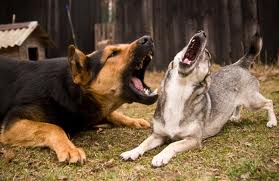
Superior Canine Communication Methods
Indonesian → guk-guk; gong-gong
Irish → amh-amh
Italian → bau-bau; arf-arf
Japanese → wan-wan; kian-kian
Korean → mung-mung; wang-wang
Kurdish → hau-hau
Latvian →vau-vau
Lebanese → haw-haw
Lithuanian → au-au
Macedonian → av-av
Malay → gong-gong
Marathi → bhu-bhu; bho-bho
Nigerian (Calabar area) → wai-wai
Norwegian → voff-voff; boff-boff; vov-vov
Persian → vogh-vogh; cut-cut; bad-bad
Polish → hau-hau
Portuguese → au-au
Romanian → ham-ham; hau-hau
Russian → gav-gav; guf-guf; hav-hav; tyav-tyav (small dogs)

Serbian → av-av
Sinhala → buh-buh
Slovak → haf-haf; hau-hau
Slovene → hov-hov
Spanish → guau-guau; gua-gua; jau-jau
Swedish → voff-voff; vov-vov
Tagalog → ow-ow; baw-baw
Tamil →wal-wal, bow-bow, lol-lol
Thai → hong-hong
Turkish → hev-hev; hav-hav
Ukrainian → hau-hau; haf-haf; dzyau-dzyau
Urdu → bow bow
Vietnamese → gau-gau; wau-wau; ang-ang
Welsh → wff-wff
The Word for Dog in Selected Languages and Dialects:
Ainu → seta
Afrikaans → hond
Akkadian → kalbum
Alacaluf → kiurro
Albanian → qen, kelysh
Algonquian → athemwa
American Sign Language (ASL) → slapping your right flat hand against your leg, then snapping your fingers
Amharic → wäshsha
Anglo-Saxon → docga, hund
Apache → góshe´
Arabic → kalb
Aragonian → gos
Aramaic → kalba
Armenian → shun
Arrernte (Western) → kngwelye
Assamese → kukur
Assyrian → kalbu
Asturian → perru
Atayal → huzil
Aymara → anu
Balinese → cicing
Bashkir → et
Basque → zakur, txakur
Batak (Toba) → asu
Belarusian → sabaka
Bemba → imbwa
Bengali → kukur, kutro
Berber (Kabyl) → uccay
Berber (Tamazight) → aydi
Bergamasco → ca
Bolognese → can
Bosnian → pas
Breton → ki
Bugotu → aku, iuiu
Bulgarian → kuche
Burmese → hkway:
Burushaski → huk
Cambodian → Jakay
Cantonese → gáu, káu
Catalan → gos
Cham → Sao
Chechen → zhala
Cheremis (Mari) → piy
Cherokee → gi li, gi-tli
Chinese (Mandarin) → gou
Chinook → kamuks
Choctaw → ofi
Chuvash → jyta
Coptic → uhor
Cornish → ky
Corsican → cane
Cree → atim
Czech → pes
Danish → hund
Dholuo → guok
Dutch → hond
Ecuadorian Quechua → allcu
Egyptian (ancient) → auau, uahr, uher
Eskimo → kringmerk
Esperanto → hundo
Estonian → koer
Evenki → nginakin
Faeroese → hundur
Fijian → kolii
Finnish → koira
French → chien
Frisian → hun, dogge
Fulani → rawandu
Gagauz → köpek
Galician → can
Georgian → dzahhli
German → Hund
Gothic → hunds
Grebo → gbe
Greek (New Greek) → skyli
Greek (Old Greek) → kyon
Guarani → jagua
Gujarati → kutto
Haitian Creole → chen
Hakka → kieu-e
Hausa → kare
Hawaiian → ilio, 'iilio
Hebrew → kelev
Hindi → kuttaa, shvaana
Hmong → dev
Hungarian → kutya
Hurrian → irvi
Icelandic → hundur
Igbo → nkita
Ilocano → aso
Indonesian → anjing
Interlingua → can
Inuit → kringmerk
Inuktitut → qimmiq
Irish → madra
Italian → cane
Japanese → inu
Javanese → asu
Kalmyk → noha
Kannada → nay
Karachay-Balkar → it
Karelian → koiru
Kawi → asu
Kazakh → it
Kikuyu → gui
Klingon → targh
Kobon (Papua) → kain
Komi-Permyak → pon
Kongo → mbwa
Korean → gae
Kuna → achu
Kunza → locma
Kurdish → seg, fendo, kelb, kûçik
Kyrgyz → it
Láadan → lanemid
Lampung → kuyuk
Lao → ma
Lapp → beana
Latin → canis
Latvian → suns
Leonese → perru
Ligurian → can
Lingala → mbwa
Lithuanian → suo, sunis
Loglan → kangu
Lojban → gerku
Luxemburgian → Hond
Macedonian → kuche, pes
Madurese → pate
Malayalam → pa tti
Malagasy → alika
Malay → anjing
Maltese → kelb
Manchu → indahon
Mandinka → wulo
Manx → moddey
Mapuche → trewa
Masai → ol-dia
Micmac → lmuj
Mohawk → erhar
Mongolian → noqai, nohoj
Mordovian → pine
Morisyen → lesyen
Mundari → seta
Nahuatl → chichi, itzcuintli
Nanay → enda
Navajo → lha-cha-eh
Nepali → kukur
Nggela → kau
Nicobarese (Car) → am
Nivkh → qan
Norwegian → hund
Ojibwe → animosh
Old High German → hunt
Old Norse → hundr
Oromo → saree
Ossetic → kuidz
Pahlavi → sag
Panjabi → kutta
Papago-Pima → gogs
Papiamento → kacho
Pashto → spay
Persian, Farsi → sag
Phoenician → klb
Pidgin → dok
Pig Latin → ogday
Pilipino → áso
Polish → pies
Portuguese → cão, cachorros
Pulaar → rawaandu
Purépecha: wíchu
Pushtu → spay
Quechua (Ancash) → allqu
Rapanui → paihenga
Romanian → cîine
Romansch → chaun
Romany → zhukel, rikono (means puppy)
Rotuman → kami
Roviana → siki
Ruanda → inbwa
Russian → sobaka (cobaka)
Samoan → maile
Sanskrit → svan
Sardinian (Logudorese dialect) → cane
Sardinian (Campidanese dialect) → cani
Scottish → cù
Sepedi → mpaa
Serbian → pas
Shelknam → wulan
Shona → imbwa´
Sicilian → cani
Sinhala → balla
Slovak → pes
Slovene → pes
Somali → eey
Sorbian, Wendish, Upper Lusatian → pos, psyk
Sotho, Northern → mpsha
Sotho, Southern; Sesotho, Sesuto → ntsa
Spanish → perro
Sranan → dagu
Sumerian → ur
Sudanese → anjing
Swahili → mbwa
Swazi → inja
Swedish → hund
Swiss German → Hund
Tagalog (Filipino) → áso
Tahitian → uri
Taino → aon
Taiwanese → kao, kaw´ ar
Tajik → sag
Tamil → nay
Tarahumara → kochi
Tatar → et
Tetum → asu
Tigrinya → kalbi
Thai → mah, soonahk
Tibetan → khyi
Tlingit → kyetl
Tocharian → ku
Tongan → kuli
Tswana → ntsa
Turkish → köpek
Turkmen → it
Tuvan → yt
Twi, Akan → okeraman
Tzeltal: tz'i'
Udmurt (Votyak) → puny
Ugaritic → kaalbu
Ukrainian → sobaka, pes
Urdu → kutta
Uzbek → it
Venda → mmbwa
Vietnamese → chó
Vogulic → amp
Volapük → dog
Warlpiri → maliki
Welsh → ci (key)
Wolio → mantoa
Wolof → hatch, xaj
Xhosa → inja
Yakut → yt
Yiddish → kelef, hunt
Yoeme → chuu'u
Yoruba → aja
Yucatec → pek´
Yukagir → mane
Yup'ik → qimugta
Yurak → men
Zapotec → bicu
Zarma → hansi
Zulu → inja ■